Henry BRISLAK
the vision behind Sentimentialism
Emotional Figurative Abstraction
Henry BRISLAK
the vision behind Sentimentialism
Emotional Figurative Abstraction
Henry BRISLAK
the vision behind Sentimentialism
Emotional Figurative Abstraction
Sentimentialism
" Back to the basic art"
"Sentimentialism seeks neither beauty nor demonstration.
It reveals what remains when we relinquish control."
Henry Brislak
Henry Brislak
founder of Sentimentialism
Sentimentialism
" Back to the basic art "
"Sentimentialism seeks neither beauty nor demonstration.
It reveals what remains when we relinquish control".
Henry Brislak
Henry Brislak
founder of Sentimentialism
Sentimentialism
" Back to the basic art "
"Sentimentialism seeks neither beauty nor demonstration.
It reveals what remains when we relinquish control".
Henry Brislak
Henry Brislak
founder of Sentimentialism
Sentimentialism
the
art
of
pure emotion
This movement stands out in today’s art world. In an era dominated by concepts, technology and media, this vision emphasises the purity of the creator’s intention, proposing a return to the very essence of creation, to raw materials and human gestures.
Here, everything begins with an emotion.
The rest is just painting.
Sentimentialism
the art
of pure
emotion
This movement stands out in today’s art world. In an era dominated by concepts, technology and media, this vision emphasises the purity of the creator’s intention, proposing a return to the very essence of creation, to raw materials and human gestures.
Here, everything begins with an emotion.
The rest is just painting.
Sentimentialism the art of pure emotion
This movement stands out in today’s art world. In an era dominated by concepts, technology and media, this vision emphasises the purity of the creator’s intention, proposing a return to the very essence of creation, to raw materials and human gestures.
Here, everything begins with an emotion.
The rest is just painting.
Sentimentialism
a unique technique
a powerful
emotion
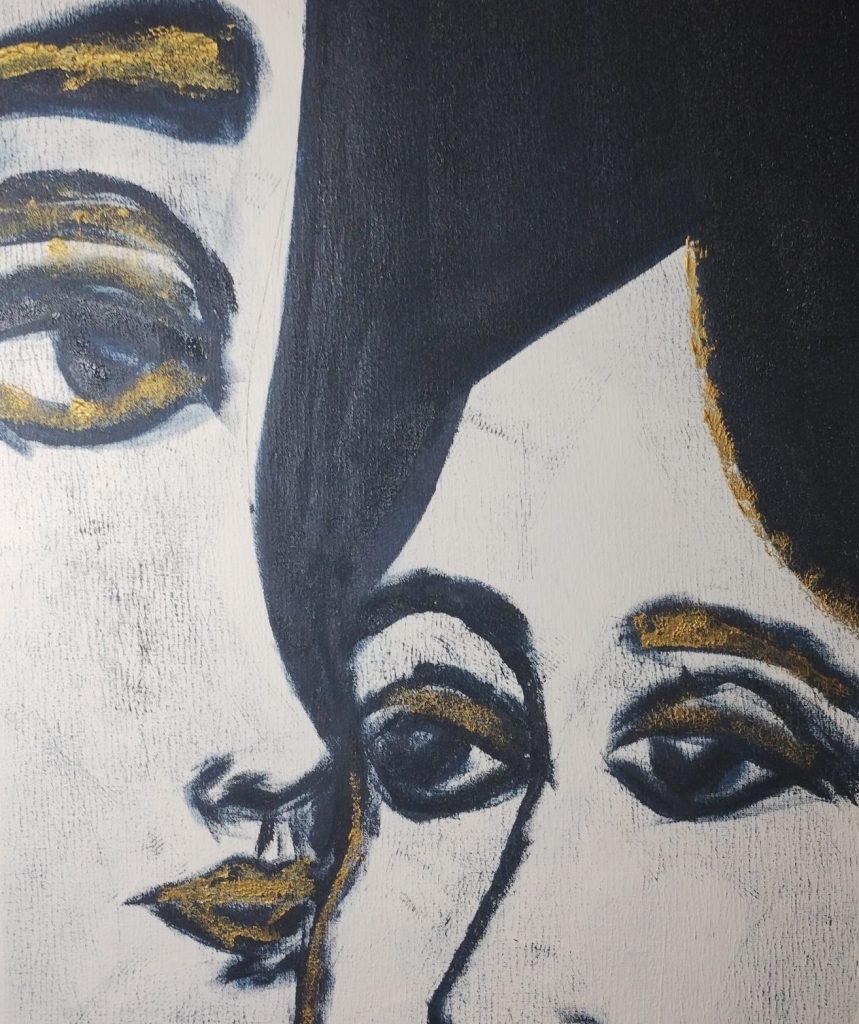
BRISLAK doesn’t use brushes or palette knives, only paint rollers. This bold choice gives his canvases a raw texture and an intense emotional depth. Each piece is a monochrome of deep Prussian blue, highlighted with touches of gold, capturing the balance between light and shadow, strength and vulnerability.
A unique technique, a powerful emotion taken to the limit of gesture.
Sentimentialism
or Sentimentalism?
Don’t get them confused.
Sentimentialism is not a mere spelling variation. It is a deliberate choice. While ‘sentimentalism’ often implies an excess of superficial emotion, Sentimentialism (with an ‘i’) represents the deep, structural connection between the artist, the raw gesture of the roller, and the final breath of the canvas.
Sentimentialism a contemporary neologism
In both art history and everyday language, some words may sound similar… yet conceal very different worlds.
Such is the case with Sentimentalism and Sentimentialism, two terms that echo each other phonetically, but diverge profoundly in intention.
Sentimentalism an excess of emotion, often nostalgic
Sentimentalism is an older term referring to exaggerated emotion, sometimes theatrical or overt.
In art and literature, it evokes an aesthetic where emotion is deliberately showcased, often with a tone of romanticism, nostalgia, or melancholic sweetness.
Emotion that is put on display, sometimes to the point of saturation.
Sentimentialism a silent emotion, meant to be felt
This approach rejects the decorative. It is a contemporary neologism for a practice where the subject is not shown, but captured in its raw state. No symbols, no narrative, no artifice.
The artist steps back to let the gesture dominate. The work becomes an open space for projection, a zone of doubt, pause, or pure resonance. It does not seek to seduce; it aims to strike through a trace, a color, or the weight of a void.
Why the distinction matters
To understand the nuance between these two terms is to enter the very heart of this movement. This is not a mere quarrel over words, but a radically different vision of the roles of both art and the viewer.”
Sentimentalism displays emotion; Sentimentialism evokes it.
Sentimentalism aims to please; Sentimentialism invites introspection.
Sentimentalism can confine us to a fixed narrative; Sentimentialism opens inner pathways without imposing them.
In a world overflowing with images and imposed stories, this philosophy offers a poetic counterpoint: a return to raw sensation, intuition, and the beauty of the unfinished.

Sentimentialism
a unique
technique,
a powerful
emotion
BRISLAK doesn’t use brushes or palette knives, only paint rollers. This bold choice gives his canvases a raw texture and an intense emotional depth. Each piece is a monochrome of deep Prussian blue, highlighted with touches of gold, capturing the balance between light and shadow, strength and vulnerability.
A unique technique, a powerful emotion taken to the limit of gesture.
Sentimentialism
a unique technique,
a powerful emotion
BRISLAK doesn’t use brushes or palette knives, only paint rollers. This bold choice gives his canvases a raw texture and an intense emotional depth. Each piece is a monochrome of deep Prussian blue, highlighted with touches of gold, capturing the balance between light and shadow, strength and vulnerability.
A unique technique, a powerful emotion taken to the limit of gesture.
Sentimentialism
art
without borders
Here, there are no imposed interpretations. Titles are intentionally unconventional, allowing each viewer the freedom to experience the artwork in their own way.
More than a creative shift, this is a shared experience, an invitation to simplicity, reflection, and human connection.”
Sentimentialism
an
art
without
borders
Here, there are no imposed interpretations. Titles are intentionally unconventional, allowing each viewer the freedom to experience the artwork in their own way.
More than a creative shift, this is a shared experience, an invitation to simplicity, reflection, and human connection.”
Beyond the canvas, a direct confrontation. This vision redefines the space between the gesture and the observer, a raw encounter where the mark of the roller dictates the emotion.
“I never retouch my work, because every imperfection is a truth.”
Henry BRISLAK
Founder of sentimentialism